Why Relying on Investing Benchmarks Might be a Costly Mistake
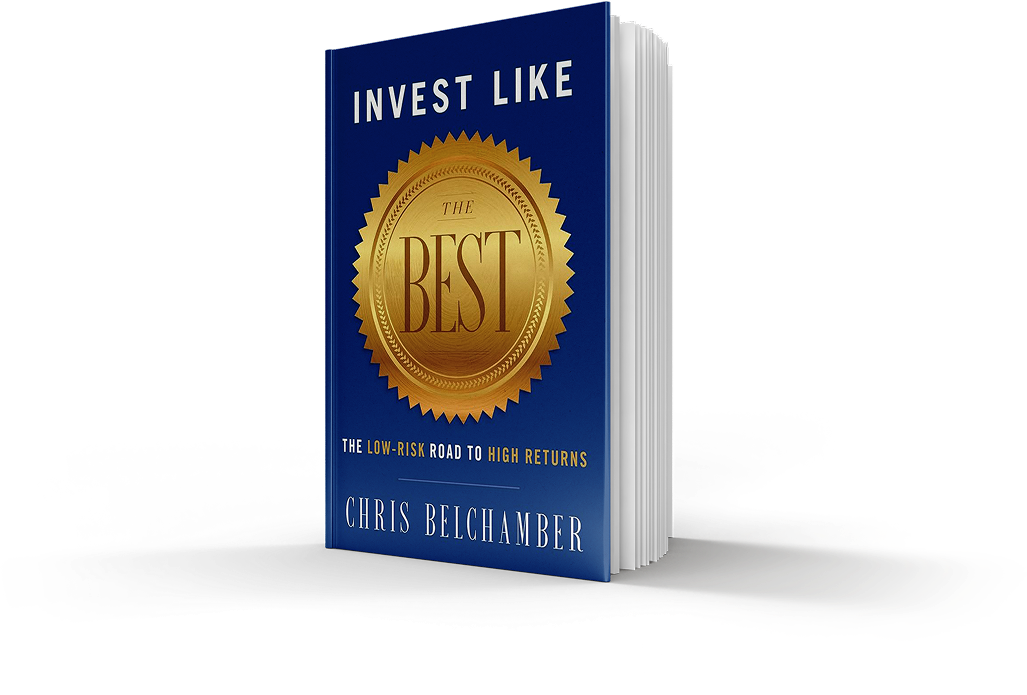
The following is adapted from Invest Like the Best. https://geni.us/InvestLiketheBest
To succeed as an investor, you must be able to determine how effective your investment strategies are. That’s probably not surprising to anyone, whether they’ve been investing for decades or are just getting started. But what might be surprising is that relying on investing benchmarks like the S&P 500 or the Dow Jones Industrial Average to give you that information can be misleading. In fact, it can end up being an expensive mistake.
This is a concept many investors and financial advisors don’t understand. However, if you want to succeed as an investor and gain financial freedom, it’s one you need to be clear on. So, let’s examine why you shouldn’t rely solely on investing benchmarks and talk about what you should be doing instead.
The Limitations of Benchmarks
Benchmarks are just a first guide—they only go so far. They have their place, certainly, but only as a form of measurement and guidance, not as an objective and direct comparison to one’s portfolio. To truly understand this, it’s necessary to recognize that while benchmarks provide a quick first take, they don’t go far in providing a full assessment.
Take an extreme example. No one is likely to thank an investment advisor for a great job in losing only 40 percent of their capital because a benchmark was down 50 percent. So, any direct return comparison between benchmarks and portfolio returns fails to take into account a manager’s ability to manage risk or have some portfolio diversification, among other factors over the long term.
For this reason, in a bull market, portfolios may not keep up with the 100 percent invested position in a single benchmark. Equally, a portfolio should outperform on the downside. The key is how the portfolio performs over a full cycle or through all the cycles.
Moving Beyond the Benchmarks
By the same token, if your portfolio simply replicates some combination of the key benchmarks, then you can also see that your manager isn’t doing anything different from some static allocation to some benchmarks. In this case, they are offering very little beyond what you could do yourself.
When your portfolio simply replicates key benchmarks, returns below benchmarks are the usual result. This is especially true in managed accounts (especially mutual funds) because costs and fees play a key role. In these instances, there should be some recognition of the cost differential between the benchmarks and the portfolio.
Using the Benchmarks Correctly
As you can see, it’s clear that benchmarks alone don’t go far enough in demonstrating how well your investment strategy is working. So what should you do instead?
One option is to use a Risk and Return performance grid. You can get all the data you need for this grid from your financial manager. The grid includes two metrics, one on each axis of the grid: the return and the daily volatility of your return over the period. On the same grid, you can place a dot representing both your return and the volatility of “your portfolio.”
Then you can plot, on the same graph, a range of benchmark indexes with the same information on the graph. The value of the benchmarks is to provide guidance to allow you an opportunity to put portfolio performance in context with general market behavior over the assessment period.
Seeing this information should empower you to have a much better idea of how your portfolio is really doing. Then you can have a far more productive conversation with your manager and a much better idea of the extent to which your best interests are being met. You are no longer dependent on the description your advisor provides because you have the data, and you know how to use it! As a result, you are in charge, and the conversation is much more productive.
Putting it All Together
It’s all too common for investors to rely on benchmarks to tell them how their investments are performing. However, when you stop to consider the limitations of benchmarks, it becomes obvious that, by themselves, they are not sophisticated enough to accurately reflect on your portfolio’s performance.
Using a performance grid along with the benchmarks will paint a much clearer picture, and enable you to make more informed decisions and get closer to achieving your investment goals.
For more advice on how to avoid common investing mistakes, you can find Invest Like the Best on Amazon.
https://geni.us/InvestLiketheBest