Q1 2021 Review: Highest average equity allocation to the worst ever long term expected return. Be a better investor than Isaac Newton.

https://royalsocietypublishing.org/doi/10.1098/rsnr.2018.0018
Many smart and successful individuals often make tragic investment errors. It is not because they lack intelligence. The problem is they have not comprehensively covered and incorporated the principles and practices of the “Best Investors” into an effective game plan or process.
Sir Isaac Newton was one of the most intelligent individuals of his time. However, he realized too late that he had overlooked one of the most important factors in investing, behavioral economics.
He is reputed to have said in retrospect that he could:
“calculate the motions of the heavenly bodies, but not the madness of people.”
https://physicstoday.scitation.org/doi/10.1063/PT.3.4521
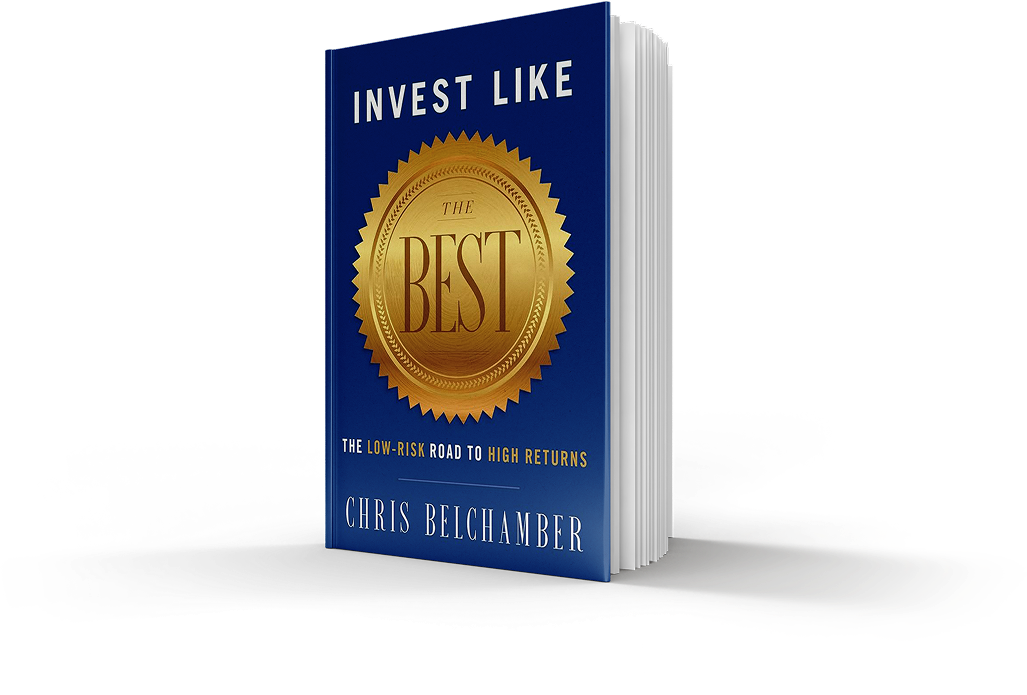
My recently published book, https://geni.us/InvestLiketheBest, highlights the behavioural awareness of “best investors” and how to develop an “Investment Mindset Framework”.
Investment bubbles often lead to tragic investment errors, and it’s not because of a lack of intelligence. It’s a lack of broad awareness of what is needed for a comprehensive and effective investment gameplan.
John Kenneth Galbraith, highlights just one of many traps that investors get caught up in.
“Those involved with the speculation are experiencing an increase in wealth – getting rich or being further enriched. No one wishes to believe that this is fortuitous or undeserved; all wish to think that it is the result of their own superior insight or intuition. As long as they are in, they have a strong pecuniary commitment to belief in the unique personal intelligence that tells them there will be yet more. Accordingly, possession must be associated with some special genius. Speculation buys up, in a very practical way, the intelligence of those involved. Only after the speculative collapse does the truth emerge. What was thought to be unusual acuity turns out to be only a fortuitous and unfortunate association with the assets.”
– John Kenneth Galbraith, A Brief History of Financial Euphoria
In 2021 if you don’t believe that you are in a bubble of monumental proportions you may not be aware of what a bubble is and how dangerous it could be to your financial well being.
It is well documented in my book that investors generally increase their allocation as markets rise. As a consequence they do well in the short term as the trend continues, but very poorly in the long term, as they end up being most invested at the highs and least invested at the lows. So, as you would expect, today, after a very long bull market in stocks and bonds, passive investing in stocks and bonds is unusually popular.
Sure enough, as the chart below shows, most investors and fund managers are as heavily invested in equities as they have ever been. This is just what naturally happens throughout every cycle. This is just an unusually extreme cycle.

https://twitter.com/dlacalle_IA/status/1373615903770865668
Here is the problem. Even though the rally may continue for a while, even basic projections of expected long term returns are broadly absent. In fact, objective measures of future expected returns are the worst they have ever been.
There is a remarkable correlation between the price/revenue ratio of the S&P 500 index and future 10 year returns. The chart below shows that the higher the price relative to revenues the lower is the subsequent 10 year performance. At the current price/revenue ratio, your expected return for the next 10 years is NEGATIVE 5% annualized return!
 https://www.hussmanfunds.com/comment/mc210315/
Bond allocations are also problematic. The 10 year Treasury Bond yield is still well below the market’s own measure of inflation over the next 10 years. The breakeven inflation rate shown in the chart below has just broken out to a new 5 year high.

https://fred.stlouisfed.org/series/T10YIE
Passive investors have the prospect of negative real returns on 10 year Treasury bonds, with the breakeven inflation rate some 0.70% higher than the current yield.
Looking ahead passive investors based mainly on a stock/bond basic allocation need a new long term strategy. Don’t let the windfall gains of recent years evaporate. There are many ways to avoid capital gains tax and avoid drawdowns.
I believe there are far better ways to invest and become proactively engaged in much improved expected returns. Preserve your capital and find better ways to invest. Widen your asset class allocation when expected long term returns are so poor in stocks and bonds.