In the first article of this series, we stepped back and reframed how taxes should be approached. Rather than treating tax season as a once-a-year obligation, we argued that taxes are one of the largest expenses most people face over their lifetime and that they deserve the same level of care as any other major financial decision.
In the second article, we narrowed the focus to the tax return itself. We explored how to read and understand it, not simply to confirm that it was filed correctly, but to recognize it for what it really is: your most complete annual financial snapshot. When you understand what is on your return, and what should be on it, patterns begin to emerge. Missed opportunities become easier to spot, and better questions start to surface.
That naturally leads to the next step.
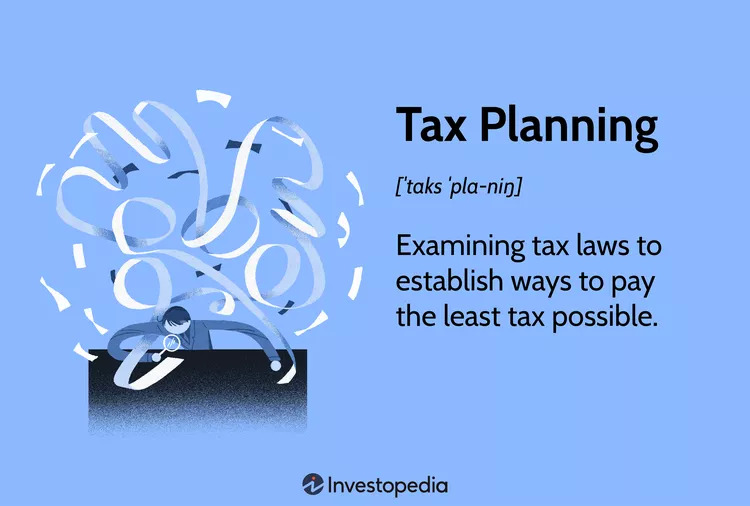
Filing a tax return is required. By itself, however, filing rarely produces the best financial outcome. The real leverage comes from planning, especially when that planning is coordinated across the major areas of your financial life.
In this article, we’ll walk through four areas where coordinated tax planning tends to make the biggest difference:
- Planning opportunities revealed by the tax return itself
- Lifetime tax optimization through financial and retirement planning
- Estate planning and tax coordination
- Investment strategy and tax efficiency
Each of these areas matters on its own. The real impact shows up when they work together.
Tax Planning Opportunities Revealed by the Tax Return
For many people, the tax return feels like the end of the process. In reality, it is often the best place to begin.
A completed return captures income, deductions, credits, investment activity, retirement contributions, and major financial events from the prior year. When reviewed thoughtfully, it can highlight both obvious mistakes and more subtle planning opportunities.
In practice, we see many returns that are technically correct but still leave money on the table. Sometimes the issues are basic, such as missing cost basis information, improperly reported home sale gains, or overlooked elections. Other times they are more nuanced. Roth conversion opportunities may not have been evaluated. Gains harvesting may not have been considered. Retirement contributions may not have been optimized.
These gaps are rarely the result of negligence. More often, they come from treating tax preparation as a transactional task instead of part of an ongoing planning process.
One of the most effective ways to reduce these issues is a disciplined and repeatable review process. A comprehensive checklist applied to every return, every year helps surface opportunities and prevent avoidable mistakes. It also shifts the conversation away from “Did we file?” toward more productive questions:
- What changed this year?
- What decisions show up on the return?
- What opportunities does this return reveal?
- What should we be thinking about before next year?
When the tax return becomes a planning tool instead of a filing artifact, it begins to do far more work on your behalf.
Lifetime Tax Optimization Through Financial and Retirement Planning
While the tax return is a valuable snapshot, many of the most important tax decisions are not annual decisions at all. They play out over decades.
Lifetime tax planning focuses on how income is earned, deferred, distributed, and taxed across the course of your life. This includes retirement account strategies, the timing of income, Social Security decisions, Medicare considerations, charitable planning, and the way investment decisions interact with taxes over time.
This type of planning is often more complex than people expect. It cannot be reduced to a single rule of thumb or a simple projection. It requires tools that can model multiple variables across long time horizons and, just as importantly, a professional who knows how to interpret those results and translate them into practical decisions.
Two common problems tend to undermine this kind of planning. First, the tools used are sometimes not robust enough to handle real-world complexity, which can lead to misleading conclusions. Second, even good tools can be misused. Without experience and judgment, it is easy to mistake output for insight.
Another point that surprises many people is that lifetime tax planning starts earlier than expected. Waiting too long often limits the available options. Many strategies work best when there is time and flexibility. Starting earlier does not mean acting aggressively. It means preserving choices and maximizing opportunity.
Estate Planning and Tax Coordination
Estate planning is an essential part of a sound financial life, and it should always involve qualified legal counsel. Having legally valid documents, however, is only part of the picture.
Estate decisions such as beneficiary designations, trust structures, gifting strategies, and asset titling often carry tax consequences that extend well beyond the estate documents themselves. When those decisions are made in isolation, conflicts can arise between the estate plan, the tax return, and the broader financial strategy.
Coordinated planning helps ensure that estate intentions align with real-world implementation. Beneficiaries are reviewed alongside account structures. Tax consequences are considered alongside legal objectives. Planning decisions are reflected accurately in ongoing tax reporting.
When estate planning, tax planning, and financial planning are treated as connected systems rather than separate tasks, the risk of unintended outcomes drops significantly.
Investment Strategy and Tax Efficiency
Investment decisions are another major driver of tax outcomes, both in the short term and over a lifetime.
Two portfolios with similar pre-tax returns can produce very different results once taxes are taken into account. Capital gains, losses, income generation, turnover, and asset placement all affect how much of an investment return you actually keep.
For that reason, investment strategy cannot be separated from tax planning. Decisions about when to buy or sell, where assets are held, and how income is generated should be made with an understanding of their tax impact, not just their expected return.
Effective investment planning balances strategy, execution, and tax awareness. When these elements are aligned, investors are better positioned to improve long-term, after-tax outcomes rather than simply chasing pre-tax performance.
This connection between investing and taxes is deep enough that it deserves a closer look, which we will take in the next article in this series.
Coordination Is the Secret Sauce
Looking across these four areas, a common theme emerges.
Tax outcomes are shaped not by isolated decisions, but by how decisions interact over time. The tax return, retirement planning, estate planning, and investment strategy all influence one another. Optimizing one area while ignoring the others often leads to missed opportunities or avoidable mistakes.
Coordinated tax planning is what turns compliance into strategy.
In the next article, we will dive deeper into investment planning and tax efficiency, exploring how coordinated decision-making can materially improve long-term results.
And because no two situations are alike, effective planning is never one-size-fits-all. If you would like to explore how these ideas apply to your own financial picture, we invite you to schedule a conversation to begin building a coordinated, personalized plan.